
• Slide title

     Mass Times     Sunday: 8:30 AM,           Wednesday: 9:00 AM,      Friday: 9:00 AM

    Button
  • Slide title

    Write your caption here
    Button
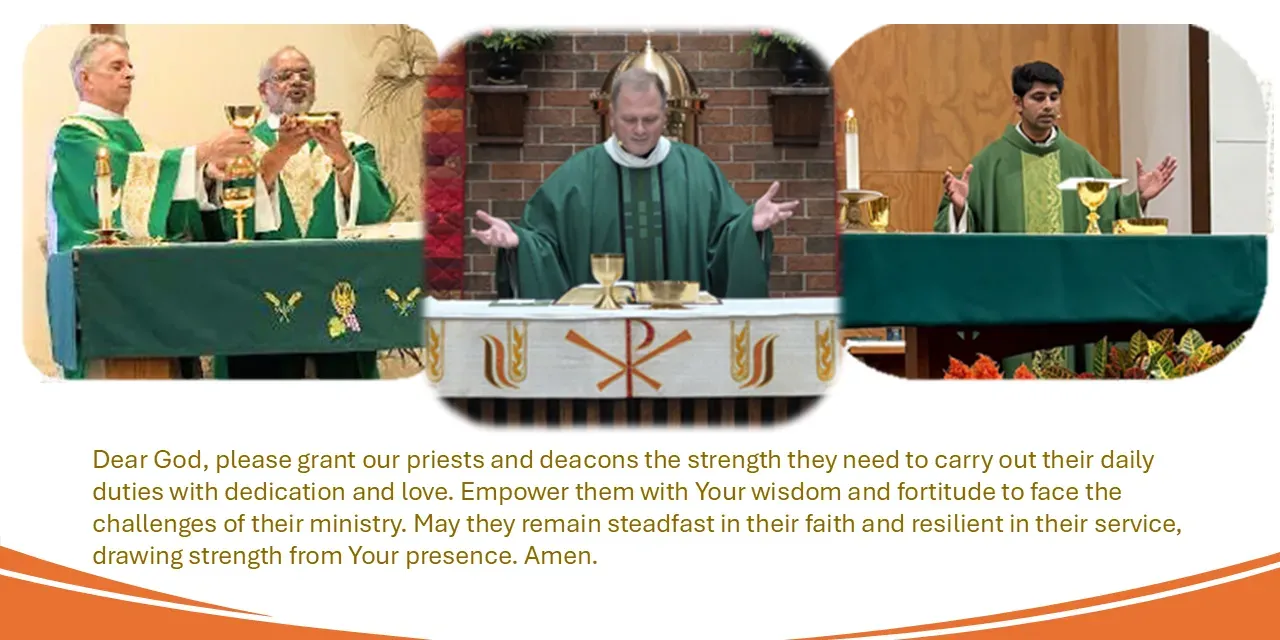
  • Pray for our Clergy

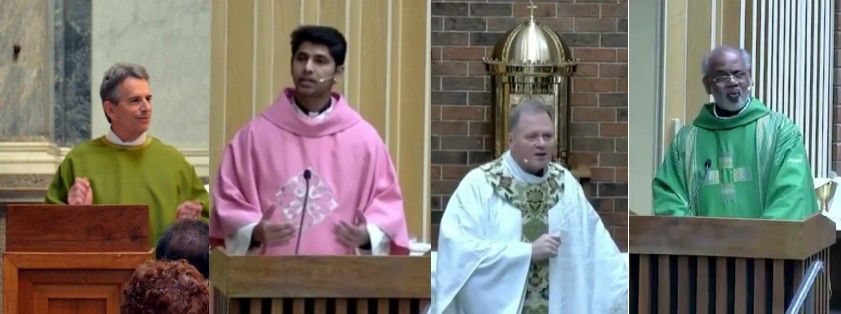
    Deacon Dan, Father Johny, Father J. and Father Dhaneesh

    Button
  • Slide title

    Write your caption here
    Button
  • Pray for our Clergy 3

    Pray for our Clergy

    Button

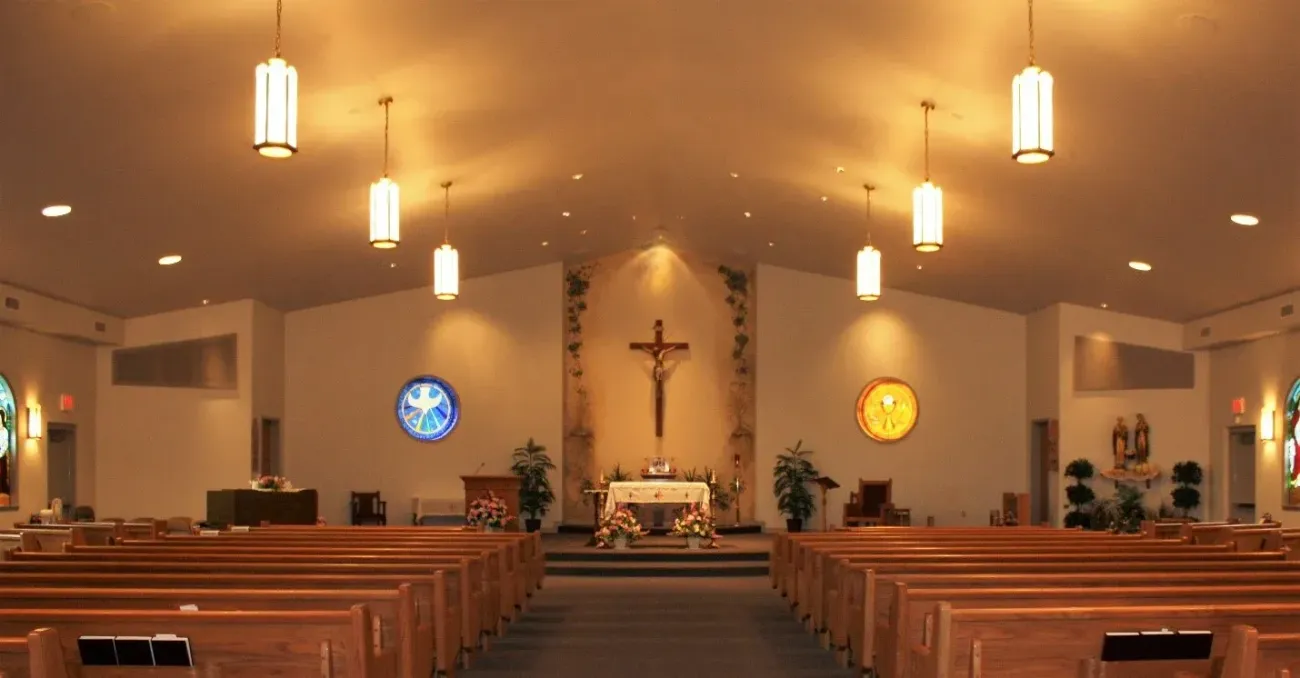
Welcome to Our Lady of the Ozarks

Serving with the love of Jesus through Mary and Joseph

Tradition + Community + Mission

Announcments & News

Check periodically for updates as things do change.

View our current and past bulletins

Support our parish

Join our parish

Mass Times

Weekend

Sunday: 8:30 AM

Weekday

Wednesday: 9:00 AM

Friday: 9:00 AM

Exposition of the Blessed Sacrament

Wednesday: 9:30 AM - 10:30 PM

Sacrament of Reconciliation

Wednesday: 30 minutes after

Sunday: 30 minutes before

The Catholic communities of Taney and Stone counties sharing Jesus through Mary, links.

Our Lady of the Lake Catholic Church | Branson, MO
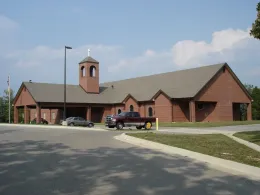
Our Lady of the Cove - Kimberling City, MO

Churches Close To Me

Our Mission

Serving with the love of Jesus through Mary and Joseph


Tradition + Community + Mission

We are called to walk with Christ, serving with joy, love and mercy. We bring our talents and our shortcomings, our histories, and our hopes. But most of all, we bring our shared faith and love of Jesus. Together in this faith we grow in loving and serving our parish and our community.


We are blessed to belong to Our Lady of the Ozarks Catholic Church.

About Us

Upcoming Events

Knights of Columbus Sunday Breakfast

The 2nd Sunday of the month: September through May

Adoration Hour of the Blessed Sacrament


Wednesdays

First Friday Mass with prayer of reparation to the Sacred Heart of Jesus!

First Friday of the month

Knights of Columbus Sunday Breakfast

The 2nd Sunday of the month: September through May

Adoration Hour of the Blessed Sacrament


Wednesdays

Calendar

Questions and Answers on Roman Catholicism

By Daniel Vaughn April 15, 2026
Twelve years ago, as I was nearing the end of my diaconate studies and formation, I spent five days on a canonical retreat. This pre-ordination retreat is a sacred and essential moment in the journey of Holy Orders. Required by Canon Law, it provides candidates with intentional time away from daily responsibilities to enter into silence, prayer, and deep reflection. The Church recognizes that ordination, whether transitional or permanent, marks a profound change in a man’s identity and mission. As the Director of the Permanent Diaconate for our diocese, I have both the privilege and responsibility to mentor our deacon candidates. This week I join five men on retreat prior to their July ordination. This retreat allows candidates to deepen their relationship with Christ, reflect on the promises they will soon make, and discern their readiness with clarity and freedom. It prepares them spiritually for a life of service and strengthens their communion with the Church and its mission. While both transitional and permanent deacons share this foundational experience, the focus of their retreats differs because their vocations unfold in distinct ways. For transitional deacon candidates, the retreat is shaped by their path toward priesthood. These men are seminarians who will serve as deacons for a relatively short period of time before priestly ordination. As a result, their retreat emphasizes the diaconate as a step within priestly formation. The spiritual conferences and periods of reflection often center on celibate chastity, priestly spirituality, and the promises they will soon make as future priests. The tone tends to be more formation‑oriented, helping them transition from academic life to the pastoral responsibilities they will soon assume. Their retreat looks ahead not only to diaconal service but also to the priestly identity they are preparing to embrace. For permanent deacon candidates , the retreat marks the beginning of a lifelong vocation in the diaconate. These men are often married, employed, and deeply rooted in family and community life. Their retreat therefore focuses on integrating ordained ministry with the realities of marriage, family responsibilities, and secular work. The spirituality emphasized is one of service grounded in everyday life, being a bridge between the Church and the world. In many dioceses, the candidate’s spouse participates in portions of the retreat, acknowledging the world The tone is pastoral and practical, aimed at helping candidates understand how their ministry will unfold within the rhythms of their existing commitments. There are a few elements that differ between the two diaconal retreats. Transitional deacons prepare for a ministry that anticipates priesthood, with an emphasis on preaching, teaching, and liturgical leadership as preparation for future sacramental responsibilities. Permanent deacons, by contrast, prepare for ministries rooted in charity, outreach, and pastoral presence within the parish and local community. And while transitional candidates focus on celibate priestly identity, permanent candidates reflect on holiness within marriage and the call to serve while remaining fully present to their families. At the heart of this call to Holy Orders lies the moment when the bishop lays his hands upon the candidate, invoking the Holy Spirit and linking him to the unbroken apostolic tradition. This gesture, simple yet immense in meaning, signifies that the man no longer serves by his own strength but is configured to Christ the Servant for the sake of the Church. Entering retreat with this reality in view invites a deeper surrender, a readiness to be shaped, claimed, and sent by God. Please join me in praying for our five deacon candidates: James Haston, Kevin Haverly, Howard Mohn, Steve Reddin, and Mike Wilson. May the grace of the Holy Spirit prepare their hearts and clarify the call as they embrace a life of service.
April 12, 2026
The Second Sunday of Easter, known throughout the Church as Divine Mercy Sunday, is far more than a devotional observance. It is a radiant jewel set into the very heart of the Easter season. Many Catholics know the Chaplet or the Image, but fewer realize this beautiful treasure the Church invites us to contemplate on this day. Divine Mercy Sunday is the one day when the Hour of Mercy and the Feast of Mercy converge. One of the most remarkable truths about Divine Mercy Sunday is that it is the only feast Jesus Himself explicitly requested. Through St. Faustina, the Lord asked that the Church dedicate the octave day of Easter to His mercy. This alone makes the feast extraordinary. It is not merely a pastoral initiative or a devotional preference -- it is a direct desire of Christ for His people. Yet the feast is not separate from Easter; it is the completion of Easter’s octave, the “eighth day” of the Resurrection. In biblical symbolism, the eighth day is the day of new creation. Divine Mercy Sunday proclaims that the Resurrection is not only a victory over death but the opening of a new world where mercy is the air we breathe. The Risen Christ does not return with vengeance or reproach. His first words to the apostles were simple and stunning: “Peace be with you.” The Gospel for this Sunday reveals another hidden jewel, it is the moment when Jesus institutes the Sacrament of Reconciliation. The Risen Lord breathes the Holy Spirit upon the apostles and entrusts them with the authority to forgive sins. Divine Mercy Sunday is, in a real sense, the birthday of Confession in the New Covenant. The feast invites us to rediscover this sacrament not as a burden, but as a homecoming. Perhaps the most astonishing grace of this day is the promise Jesus gave to St. Faustina that those who receive Holy Communion worthily on Divine Mercy Sunday receives complete forgiveness of sins. This is not the same as a plenary indulgence; but it is something even more far-reaching. It is a kind of spiritual renewal akin to a second baptism. It is Christ pouring the full power of His Passion and Resurrection into our souls. The image of Divine Mercy, with rays of red and pale light streaming from Christ’s Heart, reminds us that mercy flows from the very center of the Paschal Mystery. The water and blood symbolize Baptism and the Eucharist, the sacraments that make us new. Divine Mercy Sunday is not about a picture (or a welcoming Forsyth billboard); it is about the open Heart of Christ. Finally, this feast is especially for those who feel lost or forgotten -- the discouraged, the ashamed, the fallen-away, the wounded. Jesus told St. Faustina that the souls who most need His mercy often fear Him the most. Divine Mercy Sunday is His answer: a day when He says to every soul, “Your misery is the vessel of My mercy.” (Diary entry 1485 in Divine Mercy in My Soul.) May this feast renew our parish, our families, and our hearts with the peace of the Risen Christ.
By Daniel Vaughn March 27, 2026
Why do Christians call Good Friday “Good”?

New to the area or just visiting? 

We would love to welcome you to our church. Join us for a Mass, learn more about our parish and register with our church at the link below.

Join Us

Resources


Click on video below to see the DDF video


Support our Parish – Sponsor this Website


Be part of our mission We’re searching for a sponsor to support our website, and your business or family will be showcased with gratitude here. Reach out to learn more.
Visit Website